
Your room can have great furniture and a fresh coat of paint and still feel flat. Lighting is usually the missing piece. Layered lighting fixes that with a few simple moves, and most of them cost very little.
- Why One Ceiling Light Never Works
- The Three Layers of Light
- How to Light Each Room
- Picking Bulbs That Feel Right
- Easy Upgrades on a Budget
- Frequently Asked Questions
Why One Ceiling Light Never Works
A single overhead fixture lights everything the same way. It flattens your space, casts harsh shadows under your eyes, and leaves corners dark. Think about a restaurant you love. The light comes from many small sources at different heights. That is what makes it feel cozy.
Good lighting design works the same way at home. You mix several sources so the room has depth and you can change the mood when you want to.
The Three Layers of Light
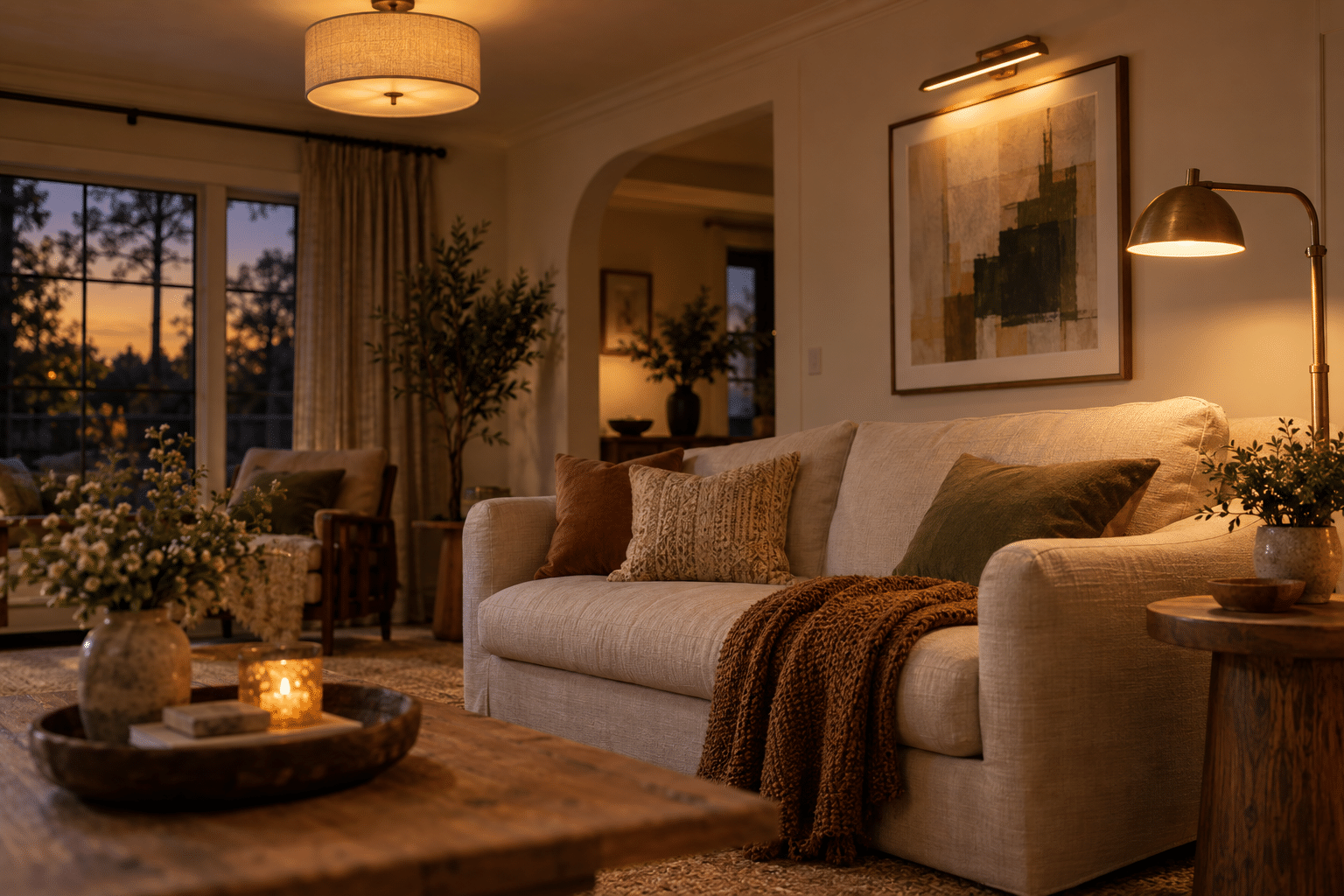
Designers sort light into three groups. You want at least one of each in a main living space.
Ambient light
This is your general, room-filling glow. Ceiling fixtures, flush mounts, and recessed lights all count. It sets the base level so you can move around safely.
Task light
This light helps you do a job. Think of a reading lamp by the sofa, under-cabinet strips in the kitchen, or a desk lamp. It should be bright and aimed at your work area.
Accent light
This is the pretty layer. A small spotlight on art, a lamp on a bookshelf, or string lights behind a plant all add personality. Accent light draws the eye and gives a room its finished look.
How to Light Each Room
Living room
- Use a dimmable overhead light for ambient glow.
- Add two or three lamps at different heights, such as a floor lamp and a table lamp.
- Place a small accent light near art or a shelf.
Kitchen
- Keep the ceiling light bright for cooking and cleanup.
- Add under-cabinet lights so your counters are never in your own shadow.
- Hang pendants over an island for both task and style.
Bedroom
- Skip the harsh overhead light at night and rely on bedside lamps.
- Choose warm bulbs that help you wind down.
- Put a dimmer on anything you can.
Home office
- Place a desk lamp to the side of your screen to cut glare.
- Use soft ambient light behind you so your eyes do not strain against a dark wall.
Lamps also help you arrange a room. If you are working on layout, our post on anchoring your furniture pairs well with this one, since lamps can define each seating zone.
Picking Bulbs That Feel Right
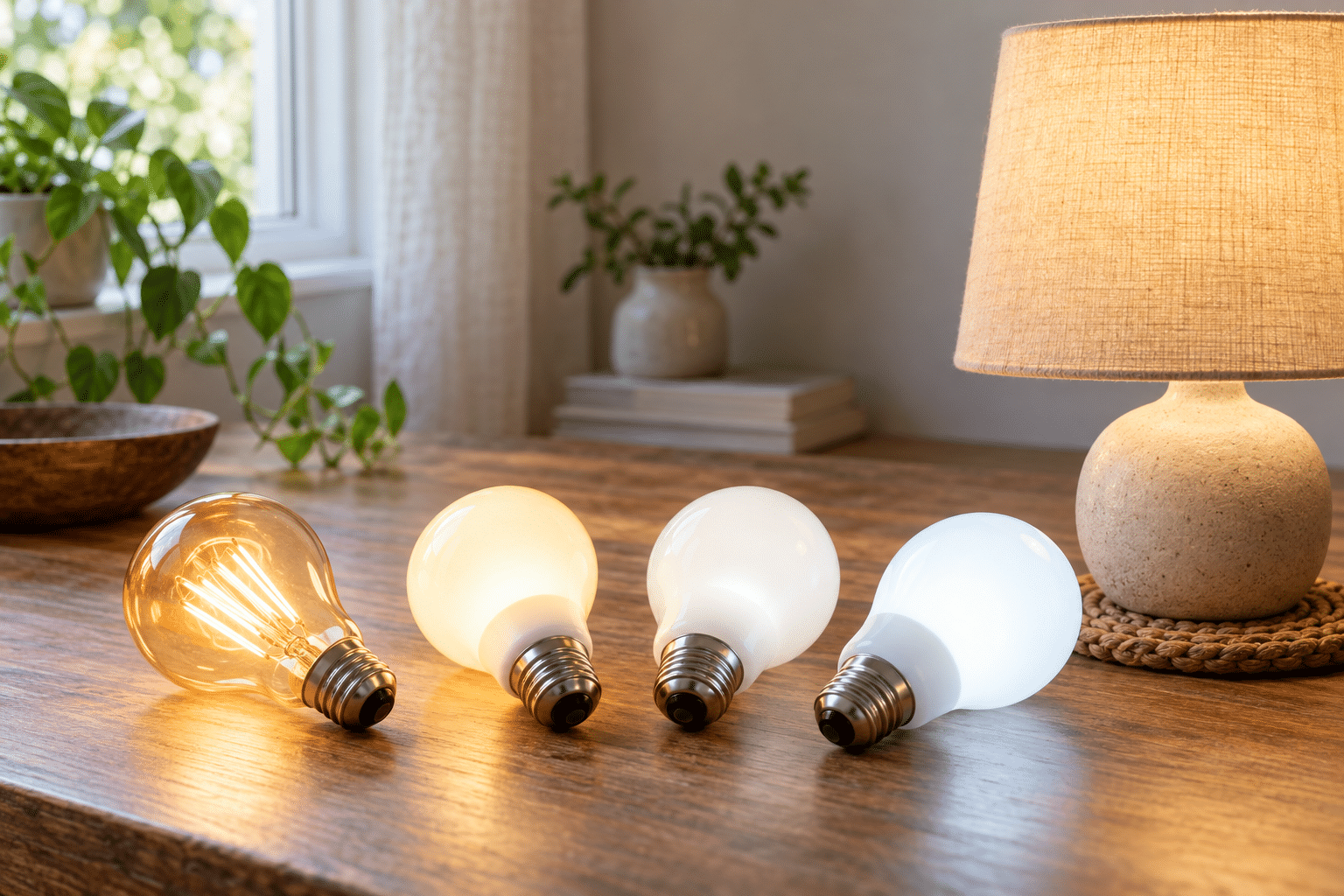
Even a great fixture looks bad with the wrong bulb. Two things matter most.
Color temperature
This is measured in Kelvins. Around 2700K gives a soft, warm yellow glow that suits living rooms and bedrooms. Around 4000K to 5000K looks crisp and bluish, which works in garages, laundry rooms, and workspaces. Mixing different temperatures in one room can look messy, so keep them close.
Light color also changes how your walls look. If your paint seems off in the evening, read our guide on why paint colors look different at home.
Brightness in lumens
Lumens tell you how bright a bulb is, while watts only tell you how much energy it uses. The ENERGY STAR guide to light bulbs explains how to read the label on the package. A lamp for reading needs more lumens than one meant for a soft glow.
LED bulbs are also worth choosing. The U.S. Department of Energy says LED lighting uses at least 75 percent less energy than incandescent bulbs and lasts much longer.
Easy Upgrades on a Budget
You do not need an electrician or a big spend to get layered lighting. Try these steps in order:
- Swap your bulbs. Warm LEDs in every lamp make an instant difference.
- Add a dimmer switch. Plug-in dimmers work with any lamp, and wall dimmers are simple to install.
- Bring in a second and third lamp. Thrift stores and secondhand shops are full of good ones. This fits nicely into a no-buy challenge if you shop your own home first and move lamps from other rooms.
- Try smart bulbs. They let you change brightness and color from your phone. Our smart home beginner guide shows how to start without overspending.
- Let in daylight. Hang curtains high and wide so windows look bigger, as we explain in how to hang curtains the right way.
Frequently Asked Questions
What is layered lighting in home decor?
Layered lighting means using ambient, task, and accent light together in one room. Each layer has a different job, and together they make a space feel balanced and comfortable.
How many lamps should a living room have?
Most living rooms look best with two to four light sources besides the ceiling fixture. Place them at different heights and spread them around the room so no corner stays dark.
What color light bulb is best for a bedroom?
Choose warm white bulbs around 2700K. They give off a soft, relaxing glow that helps you wind down in the evening.
How bright should my living room be?
A common guideline is about 10 to 20 lumens per square foot. Use dimmers so you can lower the brightness for movie nights and raise it for cleaning or reading.
Can I add lighting without hardwiring anything?
Yes. Plug-in wall sconces, floor lamps, table lamps, and battery-powered or rechargeable accent lights all work without an electrician. Plug-in dimmers and smart bulbs add control with no wiring at all.
Want more ideas for your home? Learn about Maven Blogs or contact us with your decorating questions.
Enjoyed this article? Subscribe to our newsletter for more tips delivered straight to your inbox.