
You’ve arranged your furniture according to every guide you’ve read. You left space for traffic flow. You centered the sofa on the wall. And still, something feels off when you walk into the room.
The problem might not be what you’re doing. It’s what you’re ignoring.
Most People Design for the Door
Here’s what usually happens when someone arranges a room. They stand in the doorway and place furniture in a way that looks balanced from that spot. The sofa faces the TV. The chairs frame the fireplace. Everything appears symmetrical when you first enter.
Then you actually live in the space and realize you never stand in that doorway for more than three seconds.
You sit on the sofa. You walk to the window. You curl up in the reading chair. And from every one of those spots, the room feels different than it did from the entrance.
The View That Matters Most
Instead of arranging furniture for the doorway view, arrange it for the spots where you spend time. Sit on your sofa and look around. What do you see? Is it a nice view out the window or the back of another chair? Walk to your most-used seat and check what’s in your sightline.
A room should feel good from the places you actually use, not just from the entrance you pass through.
You Might Be Furniture Floating Wrong
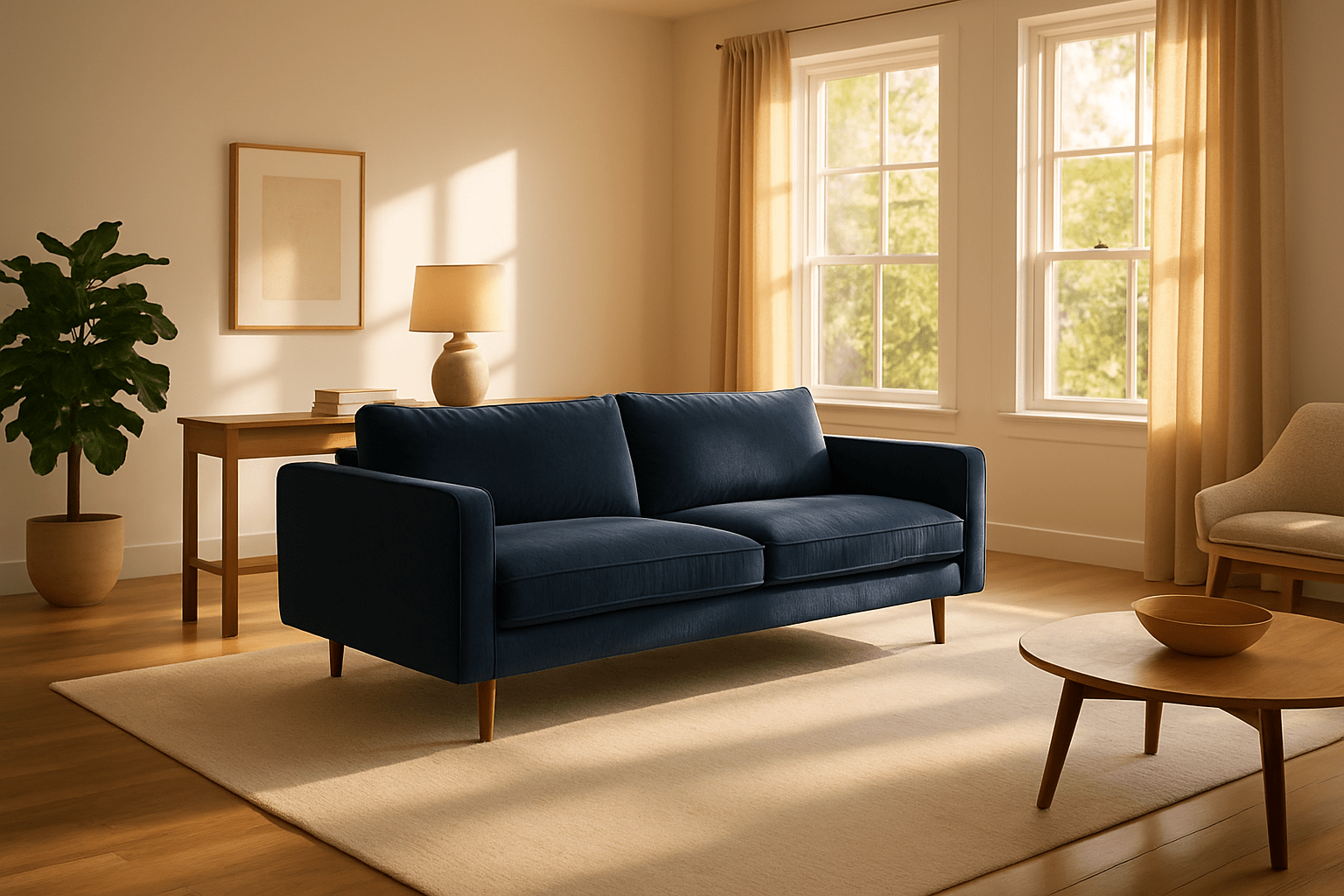
Floating furniture away from walls can make a room feel more spacious and conversational. You’ve probably read that advice a dozen times. What those guides often skip over is that floating only works if you give the furniture a reason to be there.
Floating Needs an Anchor
A sofa in the middle of the room looks purposeful when it’s anchored by something. That might be:
- A rug that defines the seating area
- A console table behind it with a lamp and books
- A clear view toward a focal point like a fireplace or window
- Matching chairs that create a conversation zone
Without an anchor, floating furniture just looks like you gave up halfway through moving.
When to Push It Back
Sometimes the best choice is to push furniture against the wall. Small rooms often feel bigger when you maximize the open floor space in the center. Narrow rooms work better with furniture hugging the long walls. And if you’re working with budget finds that don’t quite match, lining them up against walls can make the room feel more organized.
Your Furniture Might Be Talking to the Wrong Things
Every piece of furniture in a room should relate to something else. Chairs should angle toward each other or the sofa. A side table should sit within arm’s reach of a seat. A lamp should illuminate a reading spot.
When furniture doesn’t relate to anything, it becomes clutter with legs.
The Conversation Test
Look at your seating arrangement and imagine having a conversation with someone. Can you see their face without craning your neck? Are you sitting so far apart that you’d need to raise your voice? Is there a coffee table close enough to set down a drink without getting up?
According to interior design experts, seats in a conversation area should be no more than 8 feet apart. Any farther and the space starts feeling disconnected.
The Function Check
Each piece should serve the activities that happen in that room:
- Reading chair next to a window with good natural light
- Side table beside every seat that might hold a drink or book
- TV at a comfortable viewing distance and height from the sofa
- Clear paths to the spots you use most often
If a piece doesn’t support how you actually live, it’s probably in the wrong spot.
Scale Is Playing Tricks on You
A furniture layout can follow every rule and still feel wrong if the scale is off. Scale refers to how the size of your furniture relates to the size of your room and to each other.
The Big Room Problem
Large rooms with small furniture feel empty and uncomfortable. You end up with weird gaps and the space never feels cozy. The fix is to use appropriately sized pieces or group smaller items together to create visual weight.
A sectional works better than a loveseat in a big family room. Two chairs flanking a side table can balance a large sofa better than one chair alone.
The Small Room Problem
Cramming oversized furniture into a small room makes it feel even smaller. You knew that already. What’s less obvious is that too many small pieces can also make a room feel cluttered and chaotic.
Sometimes one larger sofa works better than a sofa plus two chairs plus an ottoman. Fewer, larger pieces can actually make a small room feel more spacious than lots of small ones.
This connects back to what we covered about common mistakes that make rooms look smaller. Scale plays a bigger role than most people realize.
You Forgot About the Ceiling
Most furniture arrangement advice focuses on the floor plan. Where to place the sofa. How far from the wall. What angle for the chairs. Almost no one tells you to look up.
The vertical space in your room matters too. If all your furniture sits at the same low height, the room can feel bottom-heavy and flat. Adding height variation makes a room feel more balanced and complete.
Ways to Add Vertical Interest
- Tall bookshelves or cabinets
- Floor lamps that draw the eye upward
- Artwork hung at varying heights
- Plants on stands or hanging from the ceiling
- Curtains mounted close to the ceiling rather than just above the window frame
According to research from Houzz, rooms with varied vertical elements feel more dynamic and interesting than those where everything sits at furniture height.
Frequently Asked Questions
How far should furniture be from the wall?
There’s no single right answer. In large rooms, pulling furniture 12 to 18 inches from walls can create a more intimate feel. In small rooms, placing furniture against walls often maximizes usable space. The best distance depends on your room size and how you use the space.
Should all furniture in a room be the same height?
No. Varying the heights of your furniture and decor makes a room more visually interesting. Mix low seating with tall shelves, floor lamps, and artwork at different levels. Rooms where everything sits at the same height tend to feel flat and boring.
How do I know if my furniture is too big for my room?
If you’re bumping into things when you walk through, if doors won’t open fully, or if you can’t comfortably move around the space, your furniture is probably too large. You should have at least 30 inches of walking space in main pathways and 18 inches in secondary paths.
Enjoyed this article? Subscribe to our newsletter for more tips delivered straight to your inbox.